

This post is for general education and does not replace medical advice. If you are concerned about your baby, contact your healthcare provider, call 811 to speak with a Registered Nurse anytime, or seek emergency care.
Most parents think of a lactation consultant or infant feeding specialist as someone to call when something goes wrong. But the best time to connect is often before challenges start. Just like prenatal appointments or well-baby checkups, regular feeding check-ins are a form of preventative healthcare. They help you build confidence, identify possible concerns early, and plan ahead for your baby’s developmental changes.
Whether you are breastfeeding, chestfeeding, pumping, bottle feeding, formula feeding, or a combination of methods, this guide walks you through the 6 key checkpoints and what support at each one can look like.
Why an IBCLC? The gold standard in infant feeding support and lactation care
An International Board Certified Lactation Consultant (IBCLC) is widely recognized as the gold standard in lactation care. IBCLCs complete extensive clinical training and pass a rigorous international exam, and they re-certify regularly to stay current with the latest evidence in infant feeding and human lactation.
Sweet Pea Lactation Consulting brings together several areas of expertise, so you get the best support throughout your baby’s feeding journey.
Registered Nurse (RN): Perinatal Nurse Certified by the Canadian Nurses Association and over 16 years of clinical experience.
IBCLC: Expert, evidence-based support for every way of feeding your baby: breast/chest, bottle, pumping, formula, and combination feeding.
Newborn Sleep Specialist: Build healthy, realistic sleep habits that support your baby’s sleep needs.
Parenting Coach: Previously certified in Perinatal Mental Health from Postpartum Support International, you will feel validated, seen, and confident in navigating changes throughout each stage of your baby’s development.
Combined, this means one trusted person who can support you from pregnancy to postpartum, milk feeding to starting solids, sleep changes, and getting to know your parenting style and values along the way.
Feeding support as preventative healthcare
Many parents tell me the same thing during their first visit: “I wish I had called you sooner!”
We don’t wait for a toothache to see the dentist, or for your baby to get sick to book their well-baby visits. Feeding support works the same way. Many common challenges, like painful latch, low milk supply, slow weight gain, or breast/bottle refusal are easier to prevent or fix when they’re caught early.
The World Health Organization (WHO) agrees. Guidelines for breastfeeding counselling and support recommend that families receive feeding support at least six times. Based on this guidance and my own experience as a perinatal nurse and IBCLC, here are the 6 key checkpoints I recommend for families:
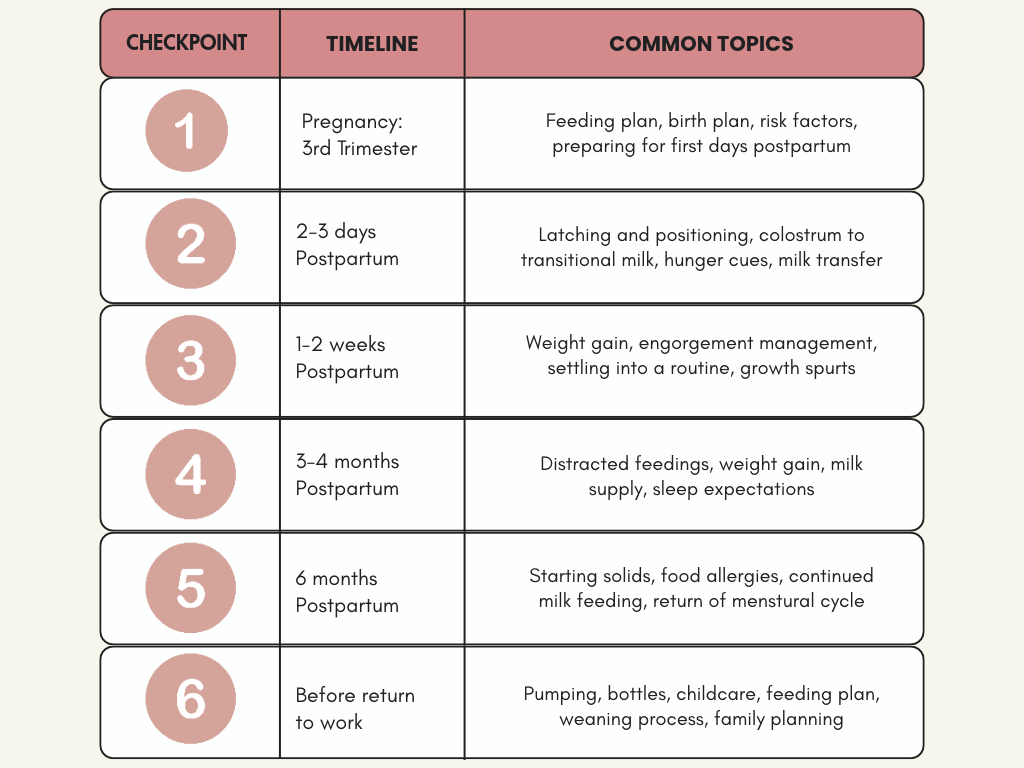
This is a basic guideline. Additional support may be needed or recommended if concerns arise or if there are more complex feeding challenges.
1️⃣ During pregnancy
“I’ve read everything, but I still don’t know exactly what to expect.”
A prenatal consultation is one of the most powerful preventative steps you can take. I’ve written an entire blog post on writing a birth and feeding plan during pregnancy. You can check it out by clicking the button below 👇
TLDR: you get an opportunity to get one-on-one education that is tailored to you and your baby based on your medical history, pregnancy, needs, and goals.
2️⃣ 48-72 hours after birth
The first few days are when many parents can feel most unsure. You are just getting to know your baby, so this is to be expected! An early visit helps to make sure feeding is off to a good start. The most common topics I review with families are:
Latch and positioning
Nipple pain or nipple damage
Milk transitioning from colostrum to increased volumes
Baby’s feeding patterns and diaper output
Normal weight loss and average weight gain expectations
Engorgement/fullness management
A plan for supplementing, pumping, or bottle feeding if needed
You deserve support during a time when your body & baby are changing quickly, especially when you’re tired and recovering from birth.
3️⃣ one to two weeks post-delivery
“We’re surviving, but are we doing okay?”
By now, most babies should be back to their birth weight. This visit confirms things are on track and helps you settle into a routine. Most parents want to discuss:
Management of breast fullness
Ensuring a healthy milk supply
Normal newborn feeding behaviours
Cluster feeding and growth spurts
How to cope with fussiness and crying
Your recovery, rest, and how you’re coping
Weight gain concerns if baby has not returned to their birth weight
4️⃣ 3-4 months postpartum
“My baby used to feed so well. Now they pop off every few seconds to look around!”
Around this age, babies become more alert and curious. Feeding and sleep behaviours often change. This is a great time for a check-in that brings together feeding and sleep support. We will cover:
Distracted feedings and methods to keep babies calm and fed
Changes in milk supply and feeding patterns
Sleep changes and healthy sleep habits as baby grows
Signs of readiness for solid foods
😴 For more information on Newborn Sleep 👇
5️⃣ before 6 months
“Where do I even start with solids? How do I know if my baby is ready?”
Most babies are ready to start solid foods around 6 months. Milk remains their main source of nutrition until 12 months, but at 6 months, most babies are ready for complementary foods. During this check-in, we can discuss:
Your baby’s signs of readiness for solid foods
How to navigate milk feedings and solids
Plan for first foods, textures, and safe ways to offer them
Discuss introducing common food allergens
Every baby is different, so you may find your baby is ready a little sooner or a little later. It is common for parents to feel both excited and anxious during this new phase. I highly recommend My Little Eater™ for their Baby-Led Feeding Method, which includes the Texture Timeline™, a proven step-by-step system that prepares you for progressing your baby through textures.
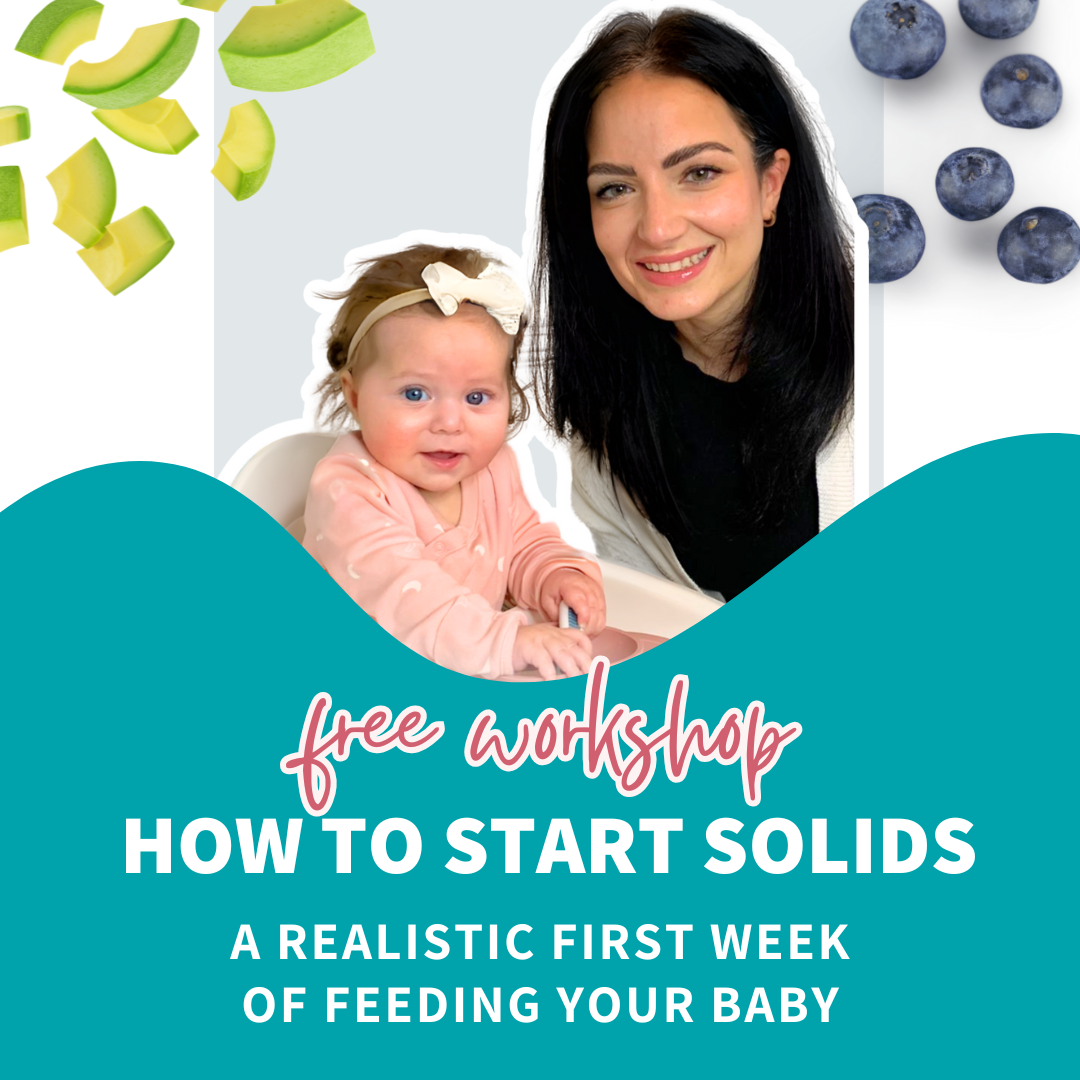
My Little Eater’s FREE recorded workshop!
If you are unsure where to begin with solids, this is a great place to start 💛
6️⃣ Return to work plan
“How will this work when I’m not with my baby all day?”
Returning to work is a big transition for you, your baby, and your family. Planning for this important milestone will help you feel prepared and anticipate what to expect. can protect your milk supply and your feeding relationship. During this consultation, most parents are curious about:
Feeding around a work schedule
Childcare expectations
Pumping and milk storage
Protecting your breastfeeding relationship
Your rights to feed or pump at work, and how to talk to your employer
⭐️ Some parents return to work at different times for different reasons. This checkpoint may occur sooner or later than 12 months postpartum. Your return to work plan will be tailored to your needs and your baby’s age and stage of development.
You don’t need to wait for a checkpoint if something feels off
These checkpoints are a guide, not a rule. You never need to wait for the “right” time to ask for help. Reach out at any time if you notice:
Pain during feedings and/or pumping that doesn’t improve
Nipple damage
Concerns about milk supply
Weight gain concerns for baby
Bottle refusal or your baby is not latching well
Tongue tie diagnosis, or questions about tongue tie
You’re feeling overwhelmed, anxious, or unsure
🏥 If your baby has fewer wet diapers than expected, is very sleepy and hard to wake for feedings, or seems unwell, contact your primary care provider right away or seek urgent care.
🩺 In Nova Scotia, you can call 811 and speak with a Registered Nurse 24 hours a day, 365 days a year
Support for every stage
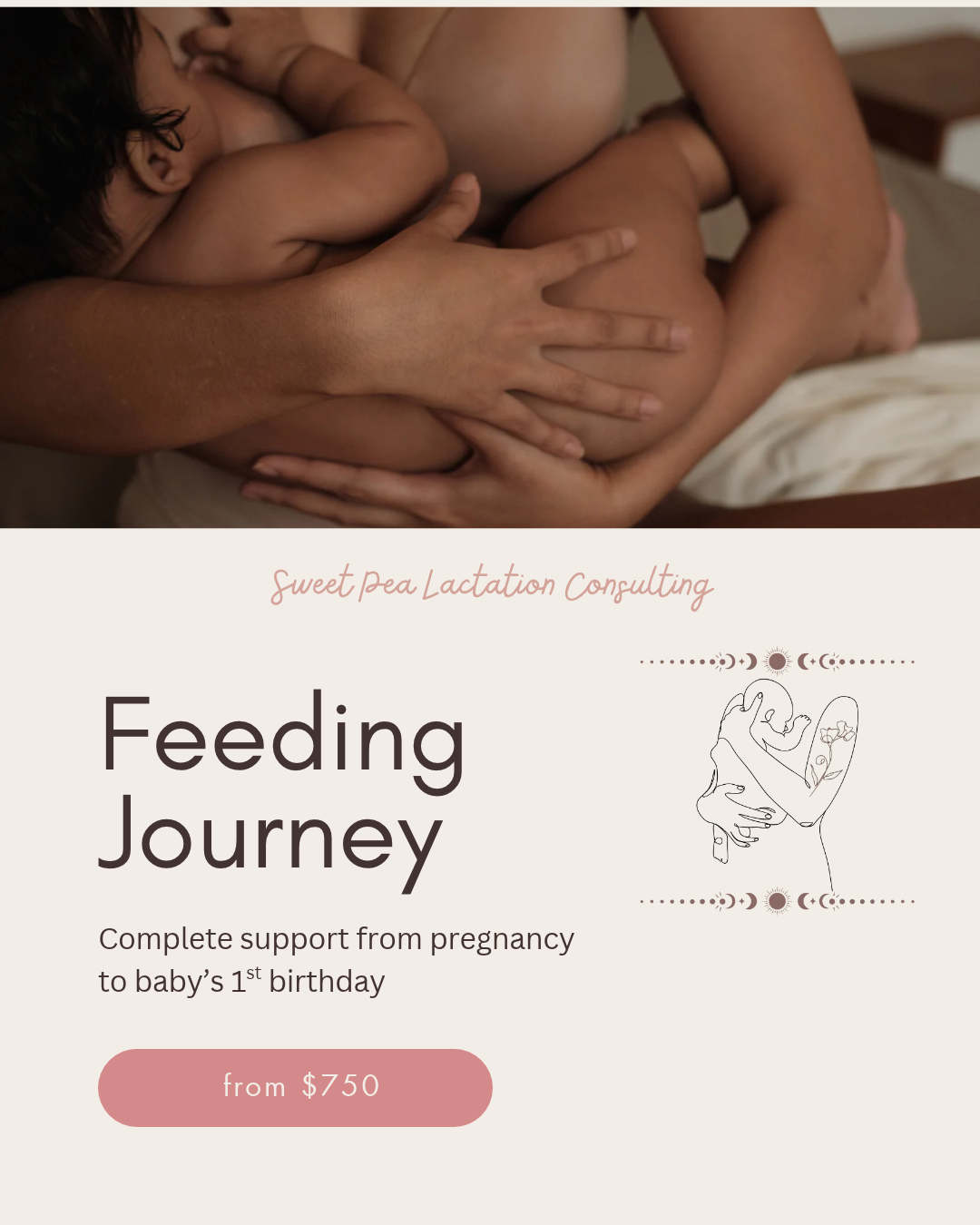
To make accessing care simple, Sweet Pea Lactation Consulting offers several package bundles to get you the best possible care:
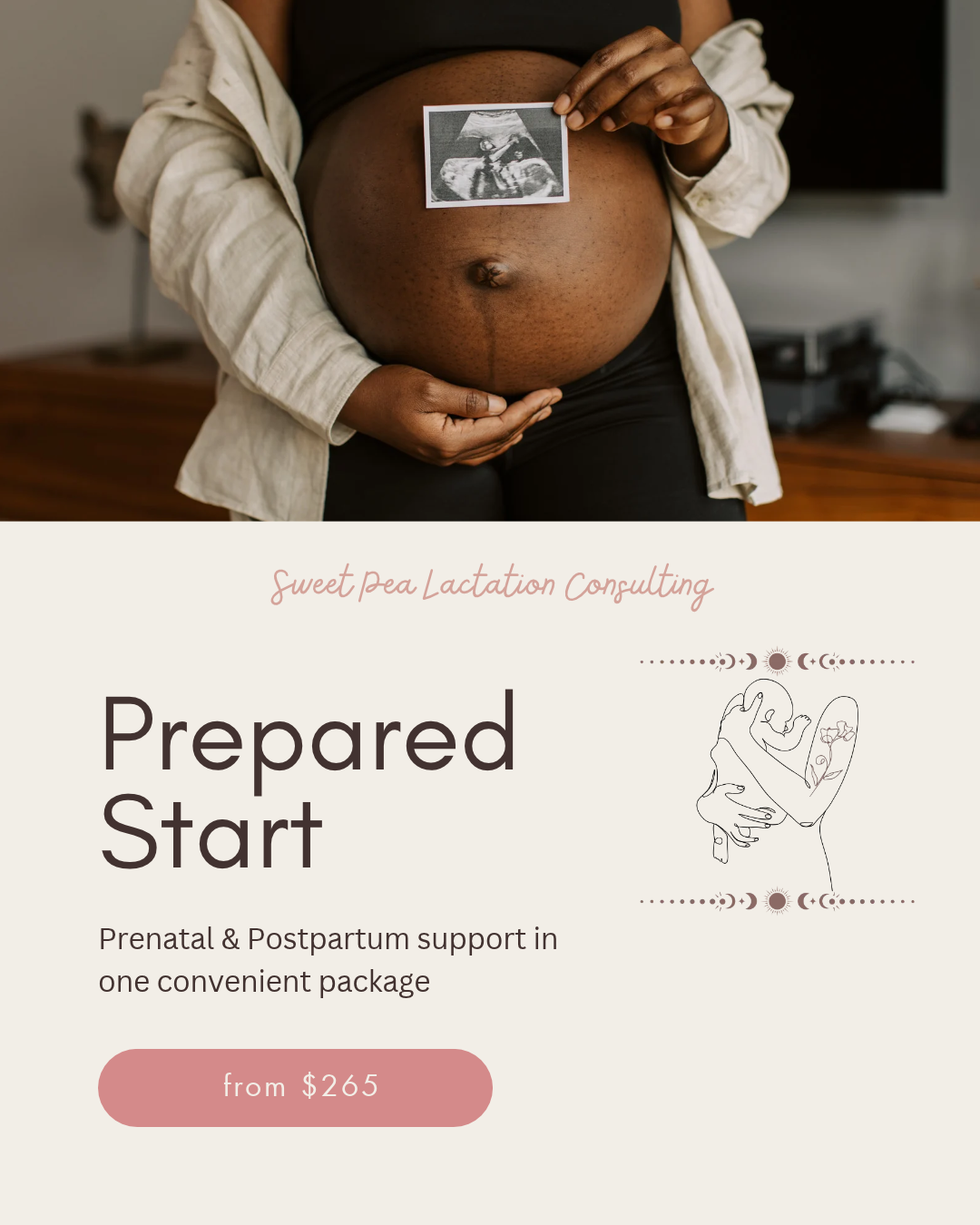
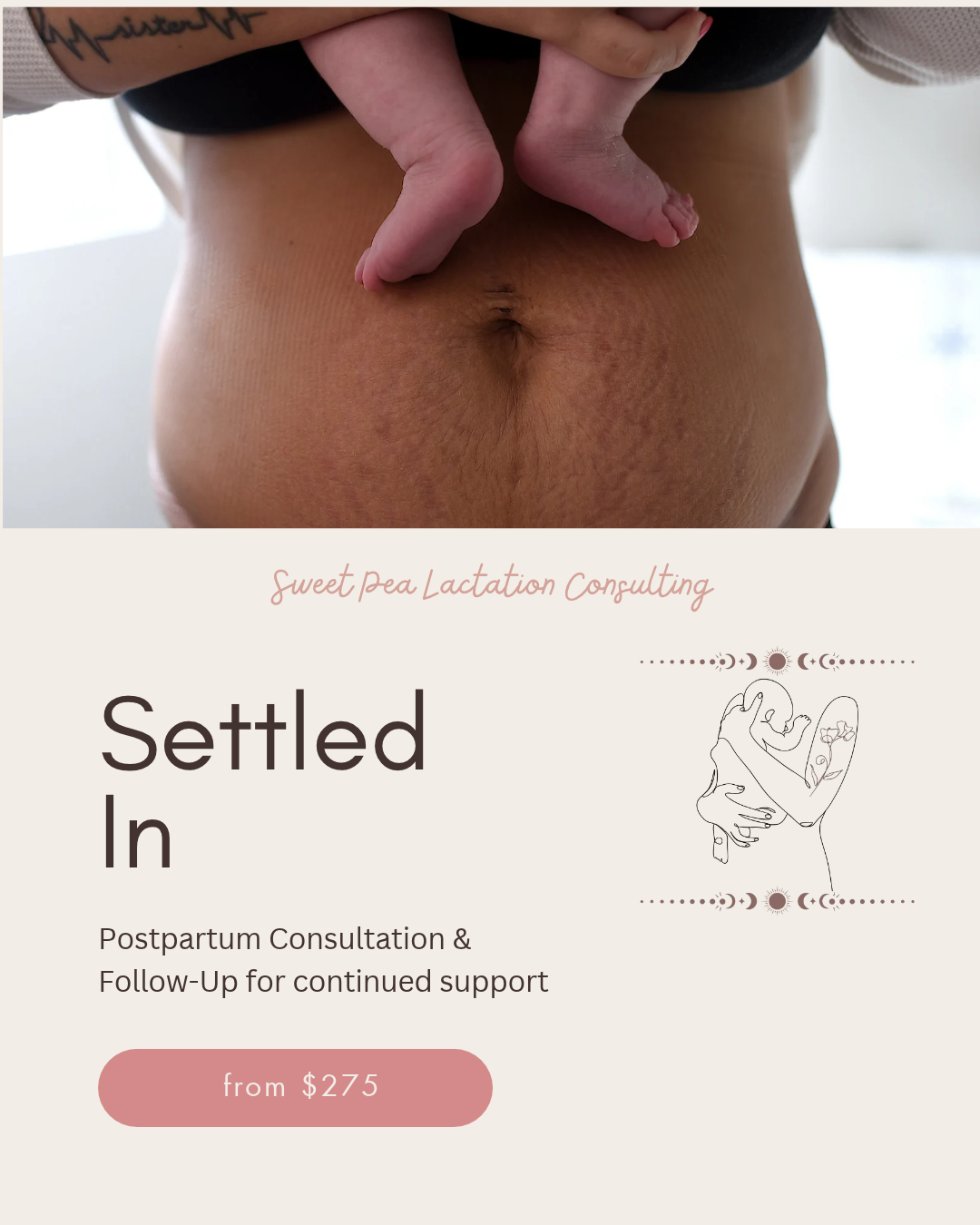
Wondering about cost?
Many private health insurance plans cover services from a Registered Nurse or Lactation Consultant. Learn how to check your coverage 👇
